Bulk Landscape Materials for Drives, Drains, Banks and Beds

3/4" Crushed Stone
Red clay can hold water and weaken support under Virginia driveways. 3/4" Crushed Stone provides drainage and an angular compacted base. Size: Approximately 3/4 inch. Type: Angular crushed stone.
Free Delivery

3/8" Crushed Stone
When compacted, 3/8" Crushed Stone creates a dense, even finish for Virginia walkways, patios, and prepared driveway surfaces. Size: Approximately 3/8 inch. Type: Angular crushed stone.
Free Delivery

#57 Stone
For a Virginia driveway entrance or concrete pour, #57 Stone provides angular aggregate where drainage needs to keep moving. Size: 3/16 inch to 1 inch. Grading: #57. Type: Angular crushed rock.
Free Delivery

#67 Stone
#67 Stone belongs within a Virginia build when drainage, concrete aggregate, or a clean crushed-stone finish is needed. Size: 1/4 inch to 3/4 inch. Grading: #67. Type: Angular crushed stone.
Free Delivery

Screenings
A paver patio over Piedmont clay needs a level setting bed that stays firm. Screenings help Virginia installers finish the prepared base. Size: 1/4 inch minus. Grading: Stone dust and fine particles. Type: Angular crushed stone.
Free Delivery

Drain Rock
Set Drain Rock around a Virginia retaining wall or drainage run when red clay needs a clear path for water instead of trapped backfill. Size: 3/4 inch to 1-1/2 inch. Grading: Washed to remove fines and dust. Type: Rounded or angular varieties.
Free Delivery

#89 Crushed Stone
A common Virginia mistake is using a fine stone where open drainage is needed. #89 Crushed Stone carries fines and packs firmly in paver joints and bedding. Size: About 3/8 inch down to fines. Grading: #89, carries some fines. Type: Angular crushed stone.
Free Delivery

#8 Crushed Stone
Virginia clay can hold water near hardscape, while limestone ground behaves differently. #8 Crushed Stone keeps drainage and paver details clean. Size: About 3/32 inch to 3/8 inch. Grading: #8, clean with little to no fines. Type: Crushed stone.
Free Delivery

#4 Crushed Stone
Using #4 Crushed Stone as a finished surface can be a poor fit; in Virginia, it works best lower in a driveway or drainage build. Size: About 3/4 inch to 1-1/2 inches. Grading: #4. Type: Angular crushed stone.
Free Delivery

Railroad Ballast
Choosing a fine compacted material for a Virginia equipment pad can leave the wrong layer below it. Railroad Ballast keeps the foundation open under load. Size: Roughly 1 inch to 2.5 inches. Grading: Graded to interlock under load while draining freely. Type: Large angular crushed stone.
Free Delivery

RipRap
After it settles into place, RipRap gives Virginia exposed banks and shorelines a heavy surface that resists moving water and erosion. Size: 4 inches to 12 inches and up. Type: Large, heavy stone.
Free Delivery
#78 Crushed Stone
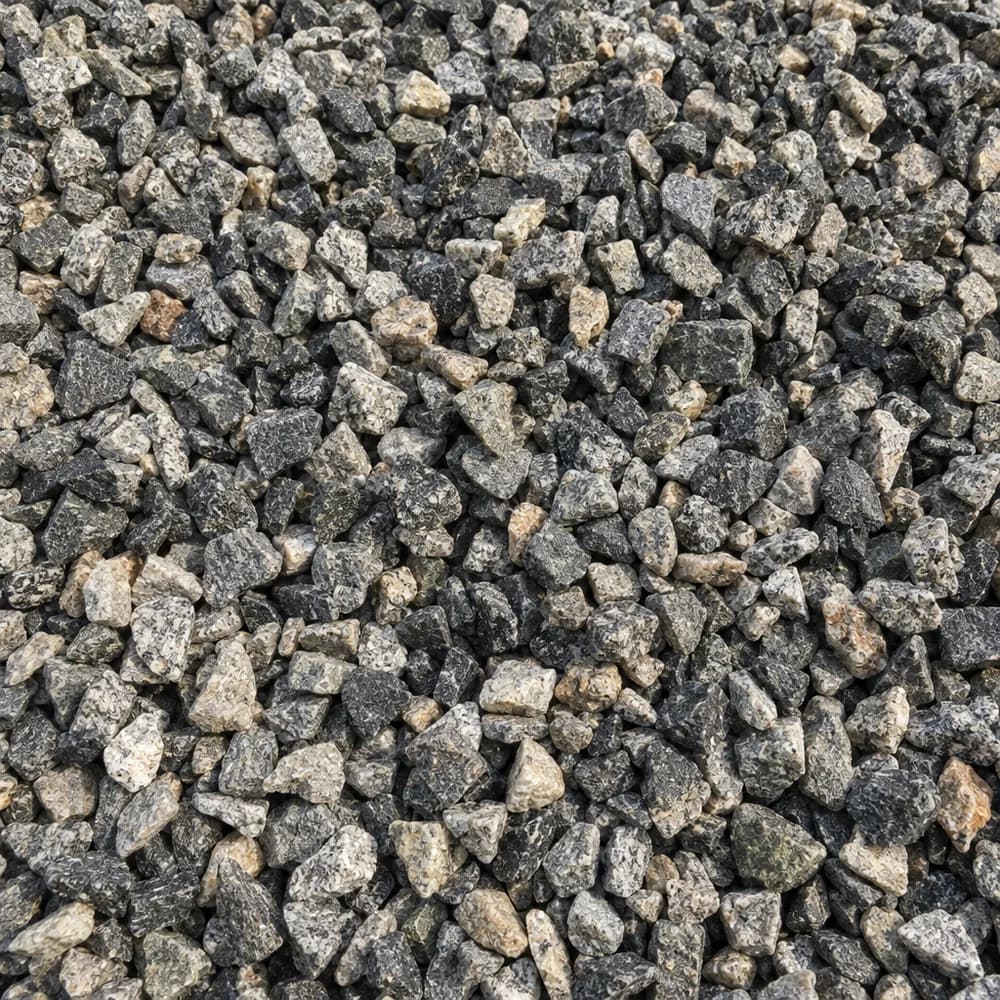
Drain lines through Virginia red clay need a material that stays open; #78 Crushed Stone provides a clean course around pavers and pipe. Size: About 1/8 inch to 1/2 inch. Grading: #78, washed with little to no fines. Type: Angular crushed stone. Supplied as: #78 or the closest local equivalent; we confirm the exact material before delivery.
Free Delivery
#2 Crushed Stone
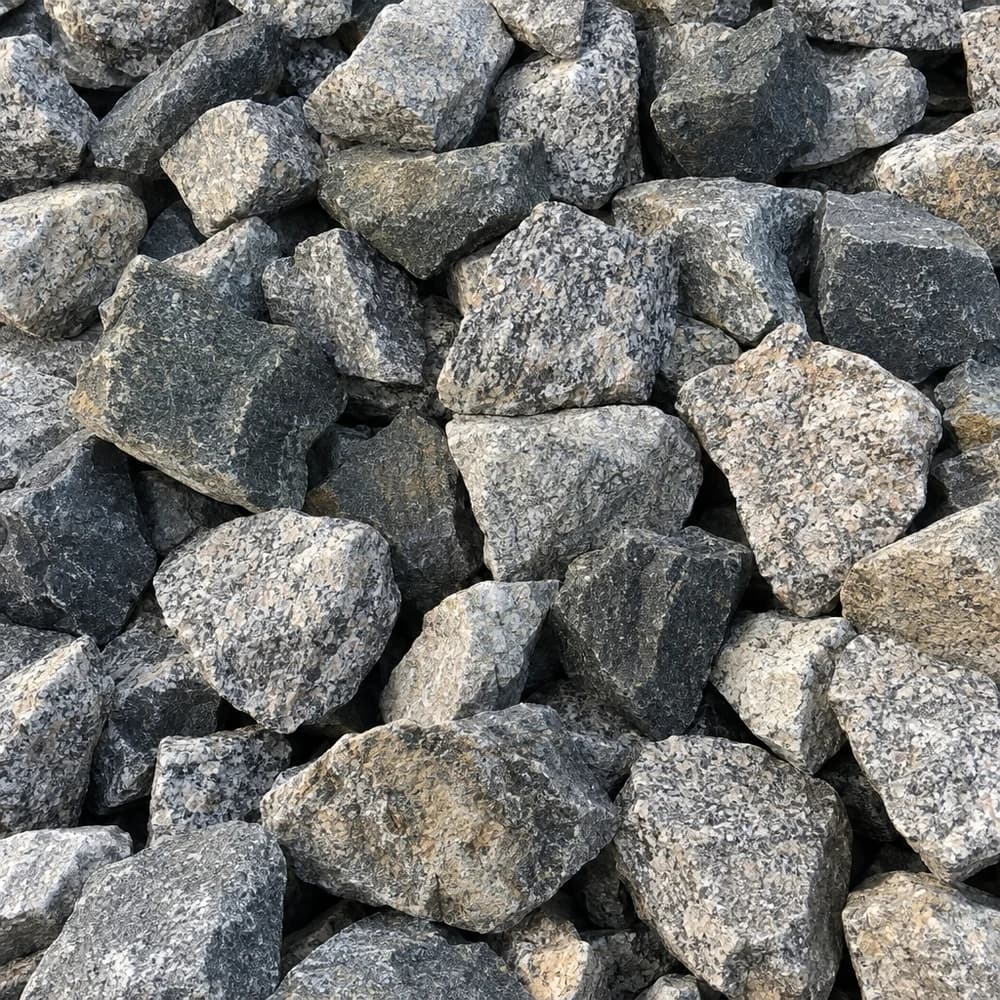
At a Virginia red-clay drainage line, #2 Crushed Stone keeps an open path around culvert and ditch work instead of forming a tight surface. Size: About 1-1/2 inches to 2-1/2 inches. Grading: #2, washed with no fines. Type: Large angular crushed stone. Supplied as: #2 or the closest local equivalent; we confirm the exact material before delivery.
Free Delivery
Most people arrive here knowing the job and not the product name. Somebody said crusher run, or the plan sheet gave a VDOT number, or a bank came away in the last storm. The listings below are grouped by what the material has to do once it is on the ground, which is the order the decision is actually made in.
Building a drive or pad that has to hold up over clay
A layer that carries wheels needs fines in it so the pieces lock together under compaction. 21A is the usual choice: 1 inch minus, graded with binding fines, and tight enough to spread the load where slow-draining Piedmont clay gives the base no help. 21B is 3/4 inch minus and carries fewer fines, worth choosing where a little more drainage through the layer matters. A VDOT number is the vocabulary a plan sheet uses, and the listing answers it with a size and a grading rather than an approval. On top, Driveway Gravel is the wearing course. For a construction entrance or a trench bottom, #4 Crushed Stone and Railroad Ballast stay open under heavy equipment.
Moving water off a flat Tidewater lot or out from behind a wall
Washed sizes carry no fines, so they keep their voids and let water through. #57 Stone is the standard French drain and wall backfill size, with #67 Stone a shade smaller. 3/4" Crushed Stone is the same nominal size sold by the inch rather than the number, and 3/8" Crushed Stone steps down for pipe bedding and finer drainage. #8 Crushed Stone and #89 Crushed Stone suit pipe bedding and tighter work, and Drain Rock is washed specifically for drywells and downspout runs. On flat ground near the Bay, where water has nowhere to run, this group matters more than base depth does.
Bedding pavers and flagstone so the joints stay shut
Screenings are 1/4 inch minus with the dust left in, which is what lets a setting bed be screeded flat and stay flat. Mason Sand is the fine washed sand for mortar, joints and play areas. Washed Sand is coarser and suits leveling and bedding under slabs.
Armoring a Bay shoreline or a scoured ditch after a storm
Waves, storm tide and rising water work at shorelines along the Chesapeake and the tidal rivers, and stream banks scour after heavy rain anywhere in the state. RipRap runs from 4 inches upward and is heavy enough to stay put under moving water. Large River Rock is the rounded alternative for a dry creek bed doing lighter duty.
Raising the grade first, then growing something on top of it
Fill Dirt is the compactable material for building a pad up or filling a low corner, screened of roots and large rock. Top Soil goes on last, in the upper few inches where seed and sod root. Garden Soil is the compost-enriched blend for raised beds. Shredded Mulch holds moisture through a humid summer.
Paths, play areas and beds that only have to look right
Pea Gravel is rounded and about 3/8 inch, comfortable underfoot. Walkway Gravel is crushed and finer than drive stone, so it stays put on a garden path. River Rock runs 1 to 3 inches in tans, grays and browns for borders and beds.
Turning a named job into a tonnage of bulk landscape materials
Each listing carries its size, grading and type, and every material has its own weight per cubic yard, which is why the calculators are split by product rather than pooled. Measure, size the layer, then set the quantity and a delivery date on the product page.
Common questions
Which listing is the base and which is the wearing course on a drive?
The base is the fines-bearing layer that gets compacted and then covered: 21A on most drives, 21B where a coarser mix suits. The wearing course is what tires actually touch, usually driveway gravel or a washed size. They are separate orders on separate calculations because the depths and the weights differ.
The pad site stays soft into April. Does that change the listing I pick?
It changes what goes in first rather than what goes on top. Soft ground wants a route for the water and, on low lots, fill to lift the pad clear before any base is rolled. Compacting a base into ground that is still holding water simply pumps it, and the layer has to be built again.
The wrong product went through at checkout. What now?
Send the order details through the contact form with what you meant to order. Before the load is assigned there is room to sort it out, and after that the practical answer is usually a second order for the material you actually need.
After the material and tonnage are settled, what does checkout still ask for?
The delivery date and the ZIP code the load is going to. Placement is not a checkout field, so leave the drop spot instruction with the order and mark the spot itself on the ground.