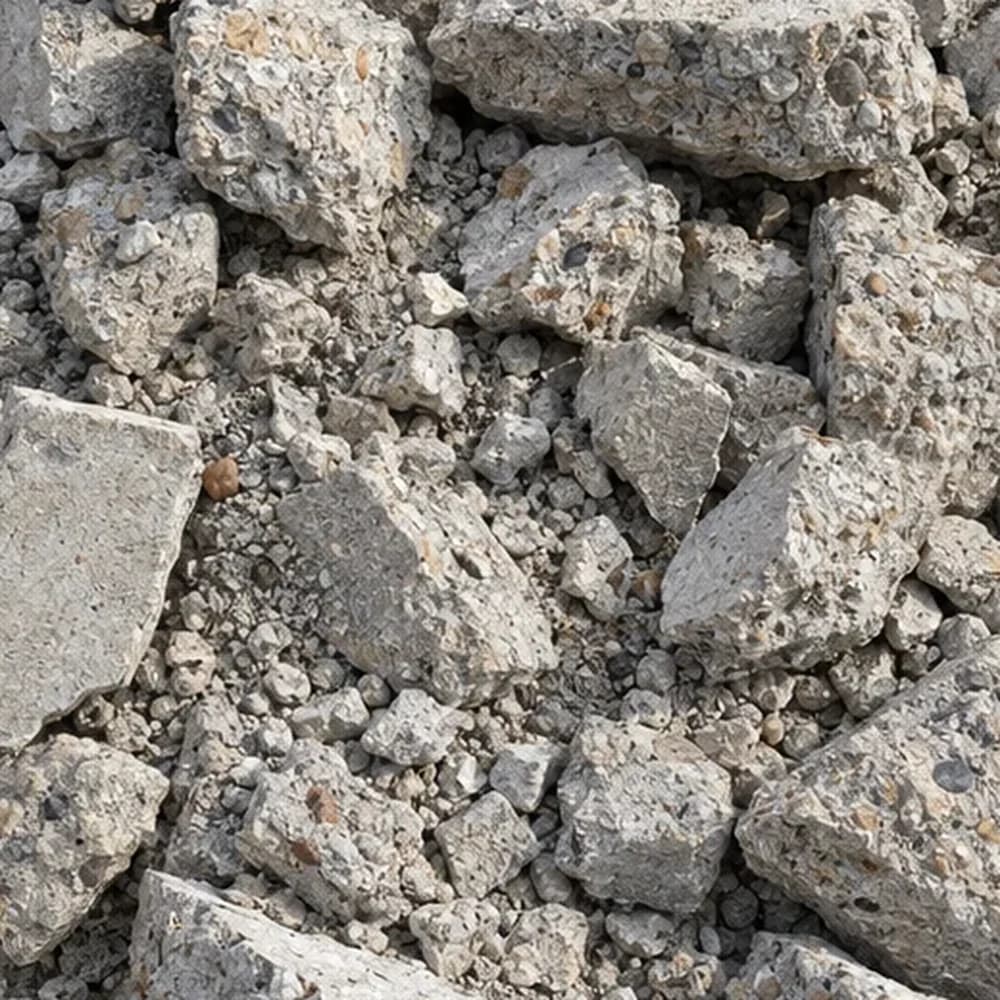
Road Base Calculator for Lanes, Pads and Turnarounds
Enter your project dimensions
The figure most people arrive at for a lane is already carrying an allowance nobody added on purpose. Somewhere between the tape and the order, a rounded depth and a padded percentage stack up, and on a run of any length that guess is worth several tons in either direction. This page does one lane in full, then explains each control so you can see exactly which number came from where.
A 240-foot valley lane, measured and converted
A hypothetical job rather than a customer one. A farm lane in the Shenandoah Valley runs 240 ft from the road to the barn and averages 11 ft of driving width. It carries a pickup, a stock trailer and the occasional delivery truck, so the base is specified at 6 inches once it has been rolled.
Area first: 240 x 11 = 2,640 square feet. Six inches is half a foot, so 2,640 x 0.5 gives 1,320 cubic feet of stone. Twenty-seven cubic feet make a cubic yard, and 1,320 / 27 is 48.89 cubic yards. Dense-graded base is published on this site at about 3,000 lb a cubic yard, which is 1.5 tons, so 48.89 x 1.5 comes to 73.33 tons. With the extra-quantity box ticked it reads 80.7.
Check that against the coverage figure the site publishes for a 6-inch compacted layer, about 36 square feet to the ton: 2,640 / 36 is 73.3. The two agree, which is the quickest way to catch a depth typed in feet instead of inches.
Place it in lifts of 4 inches or less and roll each one before the next arrives. Crown the lane 2 to 3 per cent off the centerline so storm water leaves at the edges instead of soaking into the layer, and on a lane this size split the load between two drop points along the run rather than one heap at the gate.
What each box on the form is doing with those measurements
Rectangle takes a length and a width in feet, which is how a pad or a straight lane goes in. Circle takes a diameter in feet and suits a turnaround or a round equipment pad. Multiple areas holds up to five entries, which is the honest way to handle a lane that is 11 ft through the woods and widens to 16 ft at the gate: two rectangles beat one averaged guess.
Depth (inches) accepts 0.25 to 24, and on base work it wants the compacted figure, not the loose depth you could measure the morning the stone lands. The material select drives the weight conversion. The tick box adds 10 per cent for compaction and spillage, it is ticked when the page loads, and it is the only extra-quantity control on the page. Nothing is added behind it, so if you have already worked a percentage into your own depth, untick it rather than stacking the two.
Press calculate and three figures appear: cubic yards, tons and cubic feet. Email my quote sends them to you, which saves writing 73.33 on the back of a feed receipt.
What 48.89 yards and 73.33 tons each tell you
They describe the same stone. Cubic yards answer the space question: whether the excavation will take it, whether the pile clears the septic field, and how many bucket loads the tractor is looking at. Tons answer the ordering question, because that is the unit the material is sold and hauled in.
Cubic feet are the small-job unit. A washout 3 ft by 4 ft at 4 inches is 4 cubic feet, and reading that as 0.15 of a yard helps nobody standing in the rut with a shovel.
Change the material select and the yardage holds while the tonnage moves, because the volume is set by your measurements and the weight is set by what you are ordering. Clean #57 stone over the same lane at 2 inches is 2,640 x 2 / 12 = 440 cubic feet, 16.3 cubic yards, and at about 2,800 lb a yard that is 22.8 tons rather than the 24.4 the base line would have given.
Rounding a lane order, and what the surplus is for
Round up to the next whole ton on anything lane-sized. Base stone is the one material with an obvious second home: the first rut that opens after a wet spell, the soft spot by the gate, the edge that sheds a little each winter. A shortfall is worse than it sounds, because it leaves an unrolled strip open to the next storm while a second load is arranged.
On a small shed or bin pad, taking the lower figure is reasonable. That layer is not carrying a wheel load, and a wheelbarrow of stone short shows up as a rake-out rather than a failure.
What 21A does on a clay lane that 21B does not
Both Virginia dense-graded sizes convert at the same 1.5 tons a cubic yard, so the choice does not move the tonnage at all. It moves how the layer behaves.
- 21A carries more fines and packs the tightest of the two. It is the standard choice under drives, lanes, parking pads and shed bases, and it is what the worked lane above assumes.
- 21B is the coarser size with fewer fines. It sheds water a little better and locks up a little less, which suits a base where drainage matters more than the last few per cent of density.
- Screenings are a thin leveling skim over a finished base, never the base itself. Flatwork is a different measurement again, since the base under pavers runs out past the paver edge.
- For a driving finish with less dust, a 2-inch course of #57 or Driveway Gravel goes on top of the compacted base, and sizing that top course is a separate run.
The ground decides the depth more than the vehicle does. Over slow-draining Piedmont clay, a woven geotextile between soil and stone keeps the two from mixing and is worth more than an extra inch of aggregate. On flat Coastal Plain ground where water already sits close to the surface, raising the pad above the surrounding grade does the work that depth alone cannot. West of the Blue Ridge the limestone valleys often put rock within a foot of the surface, so measure the excavation you actually achieved and keep runoff spread rather than funneled into one spot on karst ground. Frost depth is set locality by locality here, from about 12 inches in Hampton Roads to about 24 in the northern counties, so check your own figure rather than a statewide one.
Common questions
The lane bends through the trees and widens at the gate. How do I get one figure out of it?
Walk the centerline for the length rather than measuring the outside of the curve, then split the run wherever the width changes and enter each straight section under multiple areas. A 160 ft stretch at 11 ft and an 80 ft stretch at 15 ft go in as two rectangles, and the tool returns a single tonnage for both.
The existing lane only needs bringing back up to grade. What depth belongs in the box?
The depth of stone that is missing. Lay a straightedge across the ruts and low spots, measure down to the surface at several points along the run, and enter that average, which is usually 1.5 to 3 inches on a lane that has just worn thin. Entering the full 6 inches would order the base again on top of a base that is already there.
The load finishes short of the barn. What now?
The unfinished end stays soft and starts rutting the moment it is driven on, and a strip of unrolled subgrade takes rain straight into the layer you have just built. Work from the far end back toward the road so any shortfall lands where you can reach it easily with a second load, and keep the crown consistent across the section you did place.
How close will the tonnage be to what the lane actually swallows?
The volume side is fixed arithmetic. What varies is underneath: a soft or saturated subgrade takes part of the first lift into itself, and loose stone loses height as it is rolled. Measure the compacted depth you want rather than the loose depth you will tip, and treat soft ground as a reason for fabric and an extra inch, not for a larger percentage.
The tonnage looks right. What is the next step on the site?
Open the 21A product page, set the quantity and the date you want the stone, and delivery is arranged at checkout by ZIP code, as how delivery is arranged sets out. A truck needs firm, clear ground to back onto and room to raise its bed, so pick the drop spot before you order rather than on the day.
Related calculators
Thirty tons. Zero delivery fees.
Road base priced per ton, hauled free, at lane quantities where hauling usually costs the most.